|
|

楼主 |
发表于 2009-4-24 10:00:32
|
显示全部楼层
来自: 中国黑龙江佳木斯
初次上传,总照顾不周,决定取消权限
版规也非常仔细看了,但是第一次上传书籍的时候还是丢三落四,照顾及此,丢了彼处。重新回复编辑,取消下载权限的限制,并且重新上传,压缩包内容与一楼完全一样。自己以后也会多学习经验, 并为给论坛管理人员和论坛其他朋友带来的不便,深表歉意。
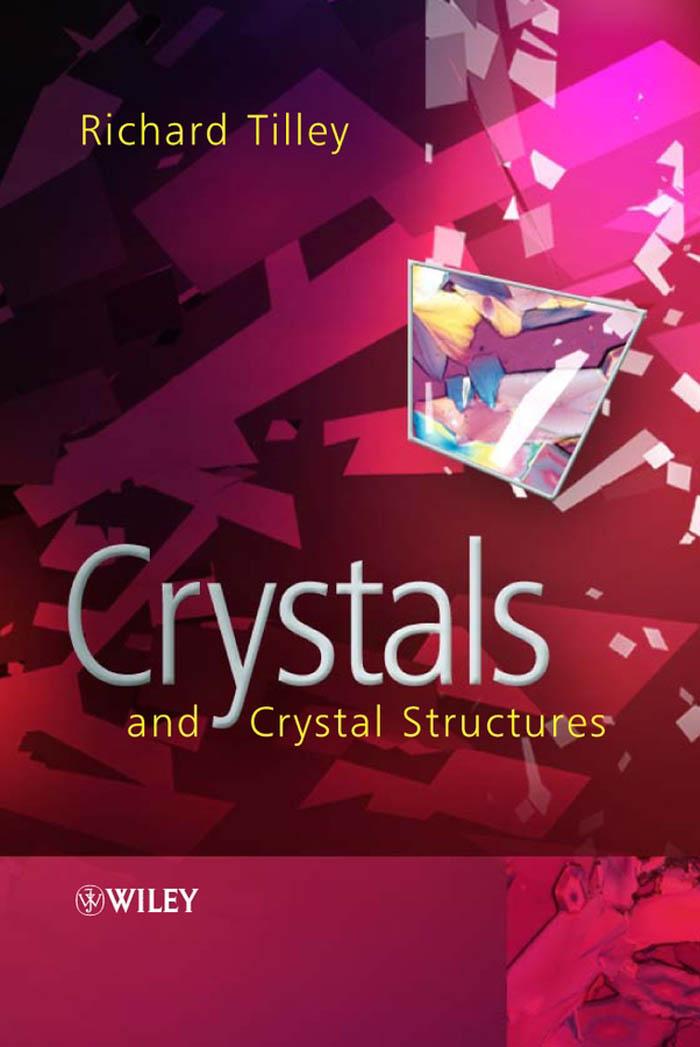
; _. s/ C6 r, g《Crystals and Crystal Structures》这本书是由Tilley所著,在晶体材料领域影响比较大。这次版本在2006年再次发行。 将其压缩后制作为两个压缩包。 主要目录及封面摘录如下,供大家参考:& z: N% x: Q0 p; p% r
Contents; L; n8 Q5 x2 K& Q/ f3 w9 L
Preface
$ V: H. H+ u2 d7 E1 Crystals and crystal structures! o: h1 O& i( {0 S# T
1.1 Crystal families and crystal systems
) M- p, A- B9 [1.2 Morphology and crystal classes
# R0 q, @( y) E; t5 Q# n/ J1.3 The determination of crystal structures9 f& d# b* Q& R; c9 `/ t% ?' l
1.4 The description of crystal structures( O' h+ M0 w- M0 m {3 V
1.5 The cubic close-packed (A1) structure of copper
/ l& P" U, n% F" c1.6 The body-centred cubic (A2) structure of tungsten
; P8 S2 K: V7 M1.7 The hexagonal (A3) structure of magnesium
& B( [+ O& Z7 j8 P2 y9 m1.8 The halite structure
3 s/ r% H) V) E$ n4 o x/ B+ \1.9 The rutile structure
$ ~( ~3 o' I: E1.10 The fluorite structure* ] X" X- K! L! ^
1.11 The structure of urea! Y: l y" v. R6 V* ?4 o3 J, q$ J
1.12 The density of a crystal
/ N+ m; R4 g; b' o/ |Answers to introductory questions7 K* q. N8 v- x& }, T' `: j0 p
Problems and exercises$ x/ X" \& c" }- i6 J2 O4 O0 _3 d2 ?
2 Lattices, planes and directions
5 h, ]- c/ F6 ~2.1 Two-dimensional lattices7 A/ N4 _% N! c) L) s
2.2 Unit cells
7 t( V4 G5 i+ x: m' ]2.3 The reciprocal lattice in two dimensions
4 Q& \8 ~+ i' n/ }" B/ [8 |1 J2.4 Three-dimensional lattices( Y7 h9 _2 O' m: ~1 D+ o4 G* k4 K
2.5 Alternative unit cells, W9 L! s; }! C: \4 U
2.6 The reciprocal lattice in three dimensions
9 l$ M2 b, b X. N* \% O3 V2.7 Lattice planes and Miller indices
: E+ F% G1 {% ]% |* m2.8 Hexagonal lattices and Miller-Bravais indices
) d9 J/ r% J, P3 L6 W8 Y: C2.9 Miller indices and planes in crystals
, [1 |/ G+ T8 ]% H& i2 @; x/ S2.10 Directions' O$ `, M2 i% U6 S" G
2.11 Lattice geometry r# p- R# M! X5 O% ]
Answers to introductory questions
B1 w3 R" D0 w* K& I( ^9 LProblems and exercises
5 ?( z H4 t( i$ e1 F3 Two-dimensional patterns and tiling1 `$ i- p+ p3 \
3.1 The symmetry of an isolated shape: point symmetry3 s! W- b* z$ O$ z) r5 \" _$ i3 X
3.2 Rotation symmetry of a plane lattice
: t& r. ~3 ^3 T3.3 The symmetry of the plane lattices
2 k; N+ O1 \1 k3.4 The ten plane crystallographic point symmetry groups3 x J* `. n, i- E6 L$ H8 H
3.5 The symmetry of patterns: the 17 plane groups
! h4 O9 M( i1 C u0 I3.6 Two-dimensional ‘crystal structures’
8 X6 x5 C. G- N* |# s9 T3.7 General and special positions6 l$ v$ z& B$ \7 [
3.8 Tesselations) p+ _! ]0 W5 v% e
Answers to introductory questions
* P8 S# T W( @3 e5 w) i0 o j& }Problems and exercises
6 C# F6 V b+ Q, P& h8 |* C1 ]4 Symmetry in three dimensions
1 r2 n) R( s) _1 e0 ?% Q4.1 The symmetry of an object: point symmetry" T" \) y4 ?' w3 o6 E1 }
4.2 Axes of inversion: rotoinversion
3 `3 _. r# L0 b4.3 Axes of inversion: rotoreflection b6 o4 N5 f7 T0 l3 `
4.4 The Hermann-Mauguin symbols for point groups
% O& e/ J1 Z- k4.5 The symmetry of the Bravais lattices
! r4 ?0 L# B d4 z8 b2 V1 I5 R S4.6 The crystallographic point groups
+ t# p; H# b d' h2 O5 ^4.7 Point groups and physical properties1 R0 Z* l% t( S/ h
4.8 Dielectric properties6 ]1 Y- v/ A# D
4.9 Refractive index
: Y$ c4 b2 B6 D% m4.10 Optical activity
( C. W! @5 h& a2 ]% f6 V! L4.11 Chiral molecules
2 {; [# u% T$ G; \4 v) i4.12 Second harmonic generation
& r5 ]6 M2 p) w8 P4.13 Magnetic point groups and colour symmetry
: `5 v' s; ?. \& TAnswers to introductory questions
! A+ D# O. d! `+ gProblems and exercises
" B5 s: ~ P! R' ^5 b; N, s/ ?5 Building crystal structures from lattices and space groups( r3 D" B( [( F+ e4 z; K% x
5.1 Symmetry of three-dimensional patterns: space groups Z, k7 V% g9 g* k
5.2 The crystallographic space groups
) z! Y- ~3 ?0 a& M7 M. k5.3 Space group symmetry symbols3 K" h( v& E! u1 E8 e
5.4 The graphical representation of the space groups
0 ^/ C3 H/ U5 Q( K3 f1 ]/ p5.5 Building a structure from a space group6 N5 ~, `9 B; ?3 O' d
5.6 The structure of diopside, CaMgSi2O6
7 T8 p: c5 Q( M" E P5.7 The structure of alanine, C3H7NO2
1 E, Y) w# l- D! X8 X( {Answers to introductory questions5 i% v2 r# V4 P! q4 x
Problems and exercises, Z8 A: K! T2 I5 W! y- T
6 Diffraction and crystal structures% }6 Y4 D3 j! e9 y
6.1 The position of diffracted beams: Bragg’s law! c5 e* K1 m5 D
6.2 The geometry of the diffraction pattern S3 g. Z3 m: X9 L' K u0 h
6.3 Particle size6 p9 g/ C. F9 G u2 j) C
6.4 The intensities of diffracted beams
# I7 r9 k4 V1 F; U0 ^6.5 The atomic scattering factor* D* P- F& u) R- p. s. i
6.6 The structure factor0 K; v: c' ]1 a$ y* m3 n
6.7 Structure factors and intensities! W8 b: x, r; c: J- i, t* Z
6.8 Numerical evaluation of structure factors/ `% Z0 L- e. d8 g! `' u
6.9 Symmetry and reflection intensities1 U2 W. |4 v7 y/ B+ [* D8 e
6.10 The temperature factor9 S. H' X6 L# I9 w0 @
6.11 Powder X-ray diffraction* L9 ^5 m8 {" c1 N2 w5 G" {# M) J
6.12 Electron microscopy and structure images
8 T* G2 s: u6 B6.13 Structure determination using X-ray diffraction7 `; p! {" A% ^8 T( T9 P
6.14 Neutron diffraction
1 b0 r [9 e: t2 l" n* y6.15 Protein crystallography/ ^5 O7 c8 g0 y1 Q1 n$ p+ i6 P4 d
6.16 Solving the phase problem' c( I& U) u7 L* k
6.17 Photonic crystals! L& X/ E }# N; J. _9 C
Answers to introductory questions. g; n) V$ q/ x% Y6 n4 z8 Y: h
Problems and exercises
C- I4 e0 p6 t, d! S9 `5 H7 The depiction of crystal structures
; d- M& V% ^" ?7.1 The size of atoms
, s) x7 o3 A' A1 }' p' C- a7.2 Sphere packing$ ]+ a, [4 ^* l9 O
7.3 Metallic radii! o. y2 c9 D" j1 }; M: F+ f
7.4 Ionic radii7 E2 h: V4 b: U8 i+ G
7.5 Covalent radii
1 O! z2 C+ B" y1 E0 L9 n# A7.6 Van der Waals radii
& j, l4 @' Y' s/ r/ x- |9 f7.7 Ionic structures and structure building rules7 X! Z6 p! y) G3 `5 F
7.8 The bond valence model r. V3 V" W; w1 m4 |3 T; P' R R) U
7.9 Structures in terms of non-metal (anion) packing& @& `3 w$ z2 m2 k+ T. }
7.10 Structures in terms of metal (cation) packing
1 Z1 M9 I+ H4 y7 ^1 M& l7.11 Cation-centred polyhedral representations of crystals
& D$ ]/ ]5 B6 l# K7.12 Anion-centred polyhedral representations of crystals
+ U* k, u d- }' k# l7.13 Structures as nets
1 {8 f) N* f% @# ~7.14 The depiction of organic structures8 f, \, X {+ l2 q7 o% ]
7.15 The representation of protein structures
1 G( z. }% Z$ F6 q4 U$ @! `Answers to introductory questions8 t+ a& p8 Y7 M" \; Y {9 d
Problems and exercises
* g5 K2 p9 F) f' p* z8 Defects, modulated structures and quasicrystals
7 j+ g" C6 {) `! _% T9 f8.1 Defects and occupancy factors
: Z. z( o3 c( o) g1 r8.2 Defects and unit cell parameters; z! y; Q/ Q1 [
8.3 Defects and density: c; K! u$ e$ l. `7 P5 h
8.4 Modular structures
! J8 r9 Z% u2 L+ ]) Q8.5 Polytypes) @* B+ i, v+ P' h* B, W% w
8.6 Crystallographic shear phases2 d, v; B2 U) V9 O" s
8.7 Planar intergrowths and polysomes7 d% u6 C7 \' n) |" M
8.8 Incommensurately modulated structures
: K# W1 a" m8 h V8 t+ g, e; v8.9 Quasicrystals; U8 Y/ T0 G& g
Answers to introductory questions
- ]' C4 `; K# m" w' V; DProblems and exercises
$ x2 ^& j8 O8 [1 J4 c5 qAppendices
1 ]4 |% a: q4 o, b+ ^Appendix 1 Vector addition and subtraction
- e8 P2 ?4 N" S q) T6 y, qAppendix 2 Data for some inorganic crystal structures
2 a n1 E; D0 V- E8 A6 jAppendix 3 Schoenflies symbols
6 F$ |, R" ~" G: m% E; }. CAppendix 4 The 230 space groups
6 h: H- m: Z; \; o* t( P L, dAppendix 5Complex numbers) ?. F" w# _/ `1 x- y9 l7 n' T
Appendix 6Complex amplitudes
& Q4 Z, b) j: b& Y8 l4 {3 g4 fAnswers to problems and exercises. N5 x' B% `! X5 h
Bibliography
4 [3 | J y. h/ C! R$ qFormula index
E0 D0 d% F4 t) X$ R' t9 h) ZSubject index |
|


 [复制链接]






 发表于 2009-4-23 14:57:01