|
|
马上注册,结识高手,享用更多资源,轻松玩转三维网社区。
您需要 登录 才可以下载或查看,没有帐号?注册

x
Rob Banerjee博士是WebCore科技公司(WebCore Technologies)业务发展部的副总裁,本文是他对“新型夹心材料如何帮助大型风机叶片制造商实现设计优化”的论述。% h# G8 S# |( _ @: ?
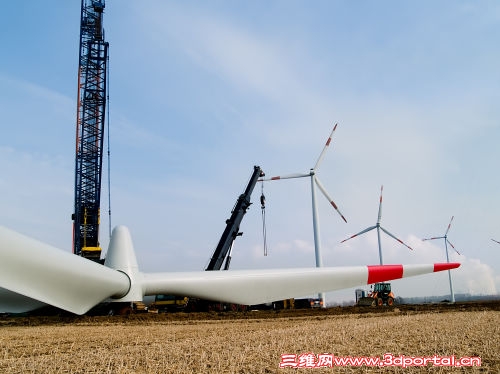
2 V8 c- k3 Y6 L, M5 C1 J 全球对零排放风力发电的需求促使风力发电机朝着更大更强健的方向发展。支持这一趋势发展的关键驱动力是经济因素:据美国风能协会(AWEA)报道,拥有更长叶片、更大扫略面积的更高风电机能够以更低的成本生产更多的电量。此外,更大的风力发电机能够捕捉到更低风速的风能,使风力发电与居民中心的距离更近。然而,风力发电产电量的增加并不是更长、更大、甚至更重风机叶片的唯一需求。客户还希望能够以最低的维修成本,使风力发电机保持更长的使用周期(长达25年),尤其是安装在海上和边远地区的风电机。0 h, O, Z- c1 E
 1 V+ K- R+ H( A8 d- A
更大、更长的风机叶片- t- E. Y$ N: h+ O) y: M6 L$ O) C' I
WebCore科技公司(WebCore Technologies)是一家夹心材料供应商,总部位于美国俄亥俄州的迈阿密斯堡市。对于类似于WebCore科技公司(WebCore Technologies)这样的芯材供应商,更大风机叶片设计频率的不断提高对新型夹心材料而言是更好的发展机会。TYCOR® W是WebCore科技公司(WebCore Technologies)生产的一种纤维增强复合芯材,它满足风机叶片制造商对夹心材料成本、重量、供应、质量及一致性的要求,填补了巴沙木和聚氯乙烯泡沫之间的空缺。
( w+ `6 }$ b7 A/ I) O TYCOR W由玻璃纤维与闭孔低密度泡沫以一种按特殊要求设计的结构结合而成,在风电行业中的应用已达两年之久。一家叶片制造商在生产45米长叶片时采用此夹心材料替代巴沙木,从而使叶片的重量减少了325磅。此外,叶片制造商发现此夹心复合材料还拥有一些通常与夹心材料无关的优势,如:2 p1 g2 {$ z5 S* B1 W. I: a: @
● 优化设计6 J0 }: T2 s; N @ U; h: l
● 通过与芯材装配商合作使叶片达到最佳化5 p6 A9 v& `% R, ]6 O+ ~& X0 m
● 改善灌注过程
; i* [ z: H6 R, {4 T& w ● 面积更大,数量更少的片材能够实现更好的装配效果( h6 X2 r- @. B6 f
● 芯材缝隙的减少提高了叶片的均匀性
, ^% [3 M# A3 R# u
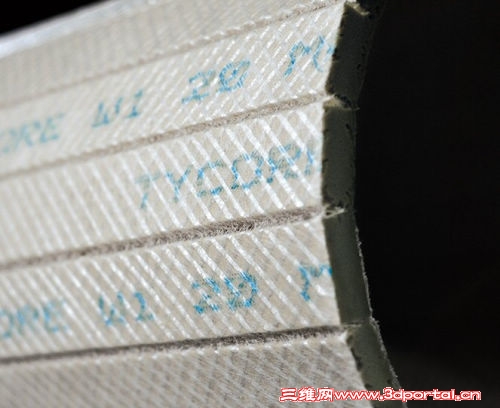
. L/ b5 T8 Q, W6 [( x由玻璃纤维与闭孔低密度泡沫制成的 TYCOR W芯材
. ?" s& }+ W% \+ z: @2 l6 ] 夹心材料的选择0 H$ q2 g& T8 Q* o) k2 b) h
随着风机叶片的不断增大,市场竞争的不断增加,叶片制造商不断优化叶片设计以保持其在市场上的竞争优势。
8 {0 O6 |: u+ J% n/ A' e WebCore科技公司销售工程部总监Scott Campbell表示:“叶片设计师和制造商可以通过去除过剩材料,对叶片各部分材料进行优化选择,使叶片在重量及成本上实现最佳化。但是,优化选择后留下的材料——树脂、层压材料和夹心材料——必须具备非常好的可预测性。”4 O1 N( ?, C% N; S5 \
叶片根部区域需要强度较高的夹心材料,巴沙木是一种比较优良的备选材料。然而,在制造较大叶片时,巴沙木的可变性给设计工程师的优化工作带来了限制。巴沙木是一种天然生长的木质产品,用于生产巴沙木夹心材料的单个原木在密度、强度及硬度上有很大的变化。即使所选原木的密度基本相同,用它制造的夹心材料的性能仍然存在巨大的差异。对巴沙木产品进行强度或硬度测试,结果会发现每个试样所测得的值大不相同。此外,木质产品可吸收水分,会使风机叶片尺寸发生变化。
5 h& k7 x& n8 C. T TYCOR W 是一种根据专门设计,由合成材料制成的复合夹心材料。与巴沙木相比,TYCOR W夹心材料具有更高的一致性。在机械性能测试中,各试样之间的差异非常小。对TYCOR W而言,能够降低其设计性的因素非常少,因此在设计的过程中,原材料所具备的很多性能在很大程度上都可以被利用。
4 d1 z8 ]/ r/ `$ P9 }1 I4 E 类似于苯乙烯丙烯晴(SAN)和聚氯乙烯(PVC)这样的结构泡沫都具有很高的一致性,且其重量比巴沙木轻。不过,它们的承载强度较小且价格更高。通常,低密度泡沫的厚度必须达到巴沙木的两倍才能实现巴沙木较高的强度和硬度性能。基于以上原因,泡沫更适合用在风机叶片中部到尖部压力较小的区域。
; }. M& _% N7 n: ^/ D- @8 @ 聚对苯二甲酸乙二酯(PET)泡沫是一种相对较新的泡沫夹心材料。相同重量的聚对苯二甲酸乙二酯(PET)泡沫和聚氯乙烯(PVC)泡沫,前者的成本效益更高,但强度和硬度比后者低。由于聚对苯二甲酸乙二酯(PET)泡沫的重量比大部份结构泡沫都大,因此不具备大幅度减少重量的性能。但是,由于聚对苯二甲酸乙二酯(PET)泡沫的价格点非常有利,且与巴沙木相比具有更好的一致性,因此已开始被市场接受。
$ x+ q, c, h, m7 P J 着眼于叶片制造商对大型叶片不断增加的需求,WebCore科技公司提供四个标准等级的TYCOR W夹心材料,为设计师和制造商优化叶片设计提供了灵活性,使他们有机会在整个叶片上使用TYCOR W夹心材料。例如,经过专门设计的TYCOR W 4可有效的用于叶片的高强度区域——或者接近根部的区域,同时它的重量较轻,是同等厚度巴沙木的高成本效益替代品。TYCOR W 1和TYCOR W 2则具有比苯乙烯丙烯晴(SAN)和聚氯乙烯(PVC)泡沫更高的成本效益,同时还具有高度一致性和减重属性,可用于叶片的中间及尖端部位。
5 i7 Z0 s0 M/ ]% Y6 }+ v1 K% X% I2 u( \4 F/ J `5 O
Dr Rob Banerjee, Vice President, Business Development at WebCore Technologies, discusses how a new core material can help manufacturers of large wind turbine blades optimise their designs.* K/ k2 a* c( R; G3 v$ R H7 v
The demand for emissions-free wind power is pushing wind turbines to grow larger and more powerful. A key driver behind the trend for larger wind turbines is economics: taller turbines with longer blades and larger swept areas produce more power at a lower cost per kilowatt-hour according to a recent report by the American Wind Energy Association (AWEA). Bigger wind turbines can also harvest lower-speed winds, allowing wind power to move closer to population centres. But increased power won’t be the only requirement for the longer, larger and sometimes heavier wind turbine blades. Customers are also expecting longer life cycles (up to 25 years) with minimal maintenance, particularly for offshore and remote locations.
6 L% `7 e9 c% y, h1 lFor core suppliers like WebCore Technologies, based in Miamisburg, Ohio, USA, tighter product specifications and increased frequency of new designs for bigger blades mean better opportunities for new core materials. TYCOR® W, WebCore’s fibre reinforced composite core, is bridging the gap between balsa and polyvinyl chloride (PVC) foam core materials by meeting wind blade manufacturers’ cost, weight, supply, quality and consistency requirements.
! l1 s9 d7 U9 A6 G/ eTYCOR W combines glass fibres with closed-cell, low density foam in an engineered architecture and has been used in the wind industry for two years. One blade manufacturer using the core material in place of balsa experienced an immediate weight savings of 325 lbs per blade on a 45 m blade. Blade manufacturers are also finding the composite core offers other advantages not normally associated with core material such as:, f( H7 q& ~; r, n8 B5 I
design optimisation;
4 s. K4 _3 p4 V$ ?yield optimisation achieved with kitting partners; , c1 N- ]/ `5 Z- B% w5 ]
improved infusion;
$ a" ~8 N8 R, ]: Cbetter fit of fewer, larger core pieces; and
* { Z% P) Y9 u1 A% d: E7 {improved uniformity due to fewer core gaps.
+ |( B2 |" S4 s9 YChoice of core material9 F7 j* Y' S$ O$ O" M$ `9 x2 M3 |
As blades get larger and marketplace competition increases, manufacturers are optimising their designs to maintain a competitive advantage.8 q4 k3 E" [5 ?( u8 Y2 I. Y
“Blade designers and manufacturers can optimise for cost and weight by removing excess material and evaluating which materials will work best in the various parts of the blade,” says Scott Campbell, Director of Sales Engineering for WebCore. “But the material that remains – resin, laminate and core – must be very predictable."
; `1 H! f$ a1 o5 L- q6 Y6 P- uWhere higher strength core material is required near the root sections of the blade, balsa is a good candidate. However, in production of bigger blades, balsa’s variability limits design engineers’ efforts to optimise. Because balsa is a natural grown, wood product, there is a large variation in density, strength and stiffness between the individual logs used to manufacture balsa core products. Even with the selection of logs of approximately equal density, there remains a significant variability in core properties. Balsa products tested for strength or stiffness produce a considerable scatter of results between individual specimens. This means that a blade designer must use a fairly large knock-down factor for balsa properties to assure adequate structural performance. The wood product also absorbs moisture which causes dimensional variation.
$ B8 V, z2 [+ i$ N) u4 hBecause TYCOR W is an engineered composite core product produced from synthetic materials, its properties demonstrate a much higher consistency when compared to balsa. Mechanical property tests exhibit significantly less scatter between specimens. Because the design knock-down factor for TYCOR W properties is low, a much higher percentage of the material’s inherent properties can be exploited in the design process, making the material easy to optimise and resulting in a more efficient blade design./ ]" Q5 m( g' t" w8 X
Structural foams like styrene acrylonitrile (SAN) and PVC are lighter than balsa and highly consistent, but carry less load and are more expensive. Low density foams must be twice as thick as balsa to match its higher strength and stiffness properties. Due to these factors, foams are better suited for use in lower stressed areas of the blade from the mid-point to the tip.
( n: s1 m |) o. L" p2 }" `Polyethylene terephthalate (PET) foam, a newer foam core material, is more cost effective then PVC foams but possesses lower strength and stiffness than PVC foam on an equal weight basis. Since it is heavier than most structural foams, PET doesn’t offer a significant weight saving. Yet because its price point is favourable and since it too is a more consistent product than balsa, it is gaining acceptance in the marketplace.
- i; I% }4 j% n, i+ hWith an eye toward manufacturers’ growing need for big blade production, WebCore provides TYCOR W in four standard grades to give designers and manufacturers the flexibility to optimise blade designs and have the option to use the material throughout the blade. For example, TYCOR W 4 has been engineered to perform effectively in the high strength areas of the blade – or near the root – yet offers a lighter weight, more cost effective alternative to balsa in thicknesses matching the natural wood product. TYCOR W 1 and 2 are more cost effective than SAN and PVC foam yet maintain the high consistency and weight reduction attributes associated with these lower strength cores used in the blade’s mid-section and tip areas. |
|







 发表于 2010-7-23 23:35:14