|
|

楼主 |
发表于 2015-1-14 17:30:21
|
显示全部楼层
来自: 中国北京
% i5 |, N6 h, s4 ~$ c0 x
不好意思,今天在看资料时才发现此帖的“构造”竟与古人撞车了(真怨平时看书太少!)。
# G. v. o" d: J b4 F
0 {* y* C7 f0 e8 `$ y$ ~7 S ]撞车的文献是:
* l4 D3 f2 n* o- T) v6 P, m" I4 @( m# I2 h: N+ \- P k+ c
《100个著名初等数学问题——历史和解》( d+ j( H" A% i# P7 T
(100 Great Problems of Elementary Mathematics:Their History and Solution)。
* E& w) k' L) U. e' y* n
3 ]4 c/ p- Q2 J) _& ~; t K第47题 范·施古登轨迹题
7 J" _& X+ x* o4 M(Van Schooten's Locus Problem)
. L t$ b: @# w; a7 R' q+ r/ L. N1 R5 @; C8 u' M$ r1 P# {
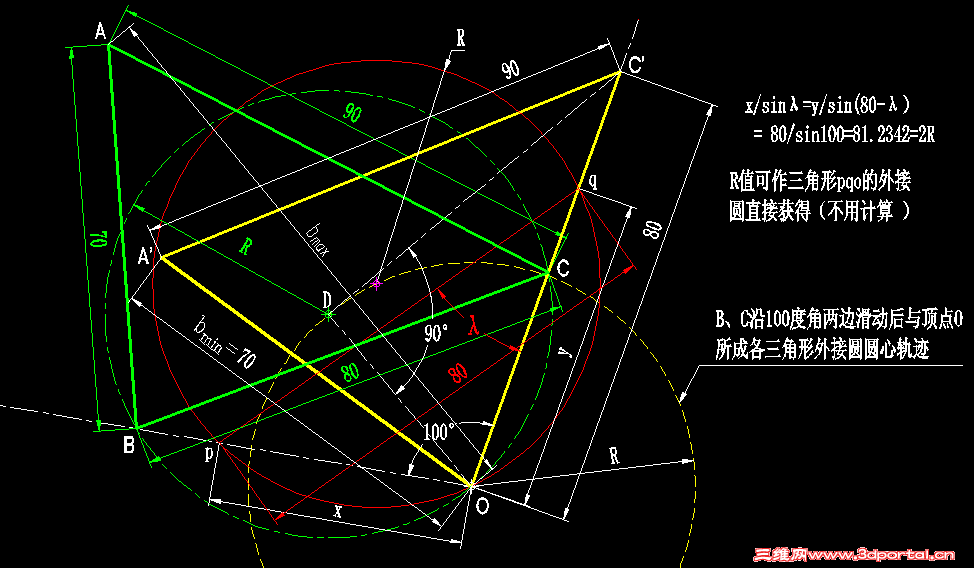
平面上的固定三角形的两个顶点沿平面上一个角的两个边滑动,第三个顶点的轨迹是什么?
" c3 L) i: |0 ~(Two vertexes of a rigid triangle in a plane slide along the arms of an angle of the plane; what locus does the third vertex describe?)
- U% n1 C x4 v6 p+ E* `0 U6 r# D1 u& z; V5 H, l- X
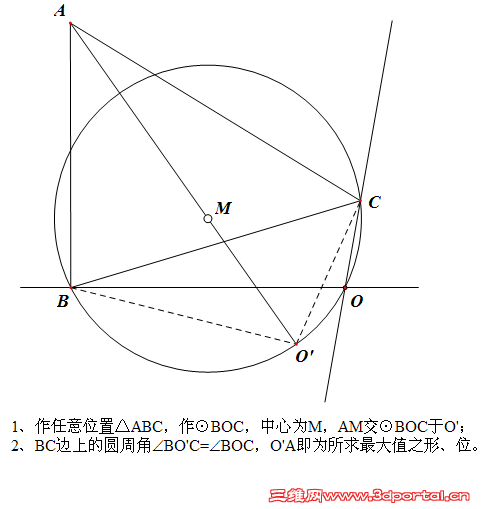
仔细拜读了原文后,依据其解法,对本帖作一最精简的几何解答如下:
+ J2 r, h7 ^4 q! K3 d$ S, P+ X/ g6 ~6 K' }
; g" g3 ~: c p# l2 C! K1 |( y% r! {

" H! q, [, v: t! X- G" h( a6 c3 t0 `9 G: W; j. r7 ^0 c8 F/ N6 u
+ k; f4 r+ ?5 K0 R9 Z |
评分
-
查看全部评分
|








 发表于 2015-1-10 01:59:48

 发表于 2015-1-10 09:42:43

 发表于 2015-1-11 19:55:27