|
|
马上注册,结识高手,享用更多资源,轻松玩转三维网社区。
您需要 登录 才可以下载或查看,没有帐号?注册

x
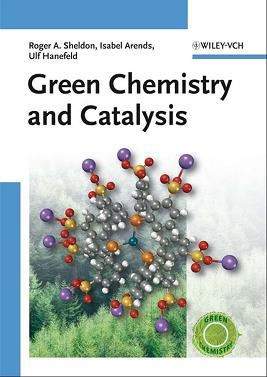
Green Chemistry and Catalysis绿色化学与催化剂
% ^0 T: a6 ]& @! R9 e, Y: KComposition :K+V Fotosatz GmbH, Beerfelden- H/ g' y; U0 ]- t# ]
Printing :betz-druck GmbH, Darmstadt7 {, b* {8 d" ?. D! I) k. _4 W2 {
Bookbinding: Litges & Dopf GmbH, Heppenheim
" v* g* O+ o3 h# j7 B$ ZCover Design :Schulz Grafik-Design, FuSgonheim# u& R" N, F- Y+ s7 n f
Wiley Bicentennial Logo Richard J. Pacifico7 K6 O/ B3 H, q2 m& x4 ~3 l# H9 l
Printed :in the Federal Republic of Germany
H" g8 e! i( [) I' J* _ISBN 978-3-527-30715-9 j/ {# _: h+ f
page:445, f1 n( w7 T. T% ~, @+ F7 P
The Author:Prof. Dr. Roger Sheldon
2 L7 \$ Y# d' e1 e) f+ T k* mEach generation has its unique needs and aspirations. When Charles Wiley first9 j" R) d5 H6 L1 N% Z* |4 H
opened his small printing shop in lower Manhattan in 1807, it was a generation4 @% Q- t' ?7 `* p+ p
of boundless potential searching for an identity. And we were there, helping to
/ r2 d" p! P w1 \: K8 ~' Vdefine a new American literary tradition. Over half a century later, in the midst6 _* E# @5 d9 F* F+ z0 h
of the Second Industrial Revolution, it was a generation focused on building$ B: h3 o+ b+ X6 X7 J$ `
the future. Once again, we were there, supplying the critical scientific, technical, C0 V. R' N! M1 c7 z
and engineering knowledge that helped frame the world. Throughout the 20th
$ k! ~' o; P* M9 E! |2 P ?Century, and into the new millennium, nations began to reach out beyond their2 G0 D/ b6 k; S1 Z* t. M% x2 e
own borders and a new international community was born. Wiley was there, ex-
0 b, H) i1 s* p1 F$ R H6 d; wpanding its operations around the world to enable a global exchange of ideas,
; T: a Z: B% Aopinions, and know-how.
$ m+ D0 t9 N, E, a- XContents6 E! T0 w# H0 J( J5 t
Preface XI" U. h. p- \: C3 `
Foreword XIII3 V: v6 l& a1 H0 b v
1 Introduction: Green Chemistry and Catalysis 1
3 P! D( c$ ]& m3 @9 D% r1.1 Introduction 1
- W1 w) x4 `. M5 M, [9 s/ O1.2. E Factors and Atom Efficiency 2, S; c+ N0 s% k! ~& e& k
1.3 The Role of Catalysis 5
9 h8 I0 e! f3 w( e; e% q1.4 The Development of Organic Synthesis 8" r5 x. c7 |4 A, M' @% v
1.5 Catalysis by Solid Acids and Bases 10
- b' T- ^$ W+ z! n1.6 Catalytic Reduction 14
8 d G! `! f" @5 K1 I8 X: S1.7 Catalytic Oxidation 18
" ^: R" ]5 U6 N0 ~' B& d7 E1.8 Catalytic C–C Bond Formation 23! c$ R/ e! j# O$ j0 D& X
1.9 The Question of Solvents: Alternative Reaction Media 27
! [) J/ s# P2 v" P1 E+ O" J# B9 B% S% m1.10 Biocatalysis 29" u& H2 q# G8 d+ M9 F% t. \" w4 `- [
1.11 Renewable Raw Materials and White Biotechnology 34
# H6 F' j& B# @ f. f, @3 p1.12 Enantioselective Catalysis 35
! `6 ?5 [2 d5 S+ o$ r7 f1.13 Risky Reagents 38
[0 H: y( i4 B- B/ H& Q1.14 Process Integration and Catalytic Cascades 39
i9 |, ^$ N! w i' N- EReferences 43
5 k% p+ E# }2 l5 M; C0 w, P- Q...........................
A0 D' h1 y6 G, c共3个压缩卷,解压后7.81M |
评分
-
查看全部评分
|


 [复制链接]




 发表于 2008-7-9 08:50:01